




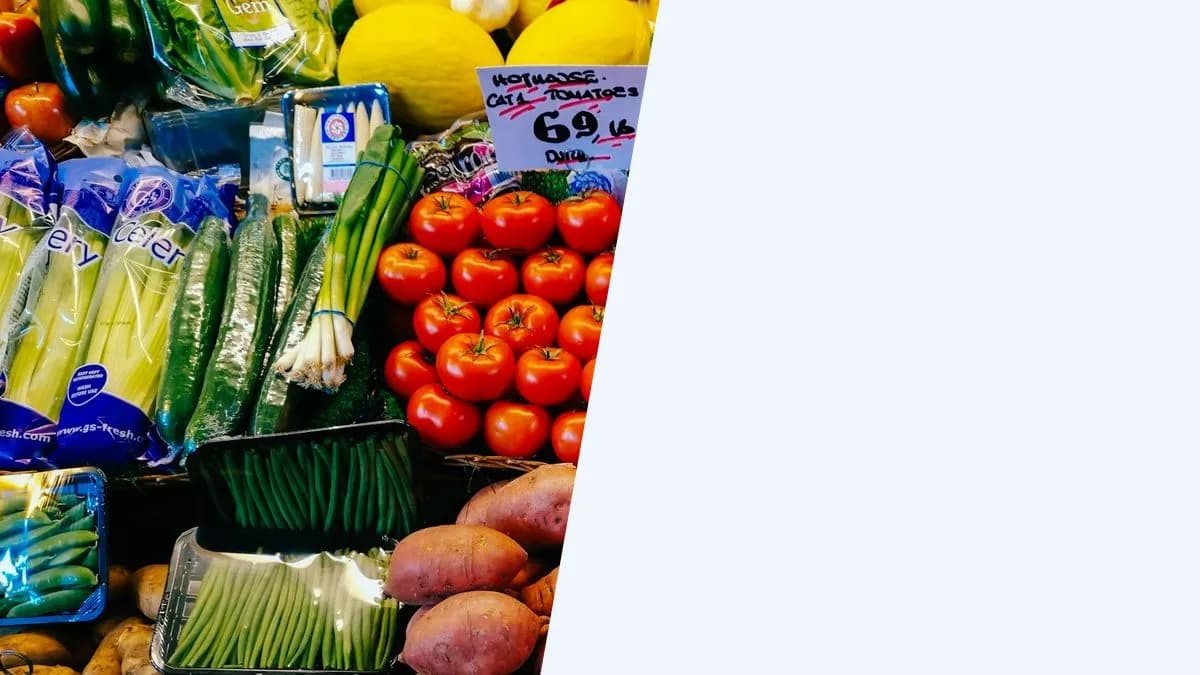

What does food actually cost an Israeli household?
The Central Bureau of Statistics measures this directly. In the 2023 Household Expenditure Survey, published on 1 January 2026, the average household spent 18,088 NIS a month on consumption, and food including fruit and vegetables accounted for 17.9% of it - the third largest block after housing (25.3%) and transport and communication (18.6%). Housing you commit to once a year. The grocery bill you re-decide every week, which is why it is the line most worth learning to run properly.
Prices themselves move less violently than the arrival shock suggests: the consumer price index rose 1.5% in the twelve months to July 2026. Fresh fruit and vegetables are the volatile exception - they fell 3.5% in July 2026 alone, and the Bureau publishes a parallel index with them stripped out precisely because they swing.
Which Israeli chains publish their prices, and how do you compare them?
The Food Law (Price Transparency) requires a large retailer to publish on a website the list of all its stores, every food product it sells together with its price, and the full set of promotions running in the store. The Consumer Protection and Fair Trade Authority keeps the page of links - one per obliged retailer - and updates it as the list changes.
The retailers named on that page include:
- Rami Levy (רמי לוי), including Super Cofix and Quik
- Shufersal (שופרסל), including BE
- Victory (ויקטורי), Yochananof (יוחננוף), Osher Ad, Machsanei HaShuk and Hatzi Hinam
- Carrefour, Quik and Bitan Online, published together by Global Retail
- Tiv Ta'am, Yellow, Super Yuda and Fresh Market
- the pharmacy chains Super-Pharm and Good Pharm
Several of them sit behind a username that the Authority prints on the same page, usually with the password field left blank. That is the honest answer to "which chain is cheapest": it depends on your basket and your branch, and the data to settle it is public rather than a matter of opinion.
What do Israel's price-display rules give you at the till?
Sections 17A to 17G of the Consumer Protection Law require a price on every product in the shop, shown as one total price in shekels that already includes VAT, fees and every compulsory payment the customer has no way to waive. An advertisement is not obliged to quote a price at all, but a trader who chooses to quote one must quote that same total.
The Authority is explicit about what happens when shelf and register disagree: the binding price is the displayed one, even if the till is higher. If you insist on it and the shop refuses, the law gives you a claim for statutory damages with no need to prove loss, which a small-claims court may set at up to 10,000 NIS.
Loose goods are signed rather than labelled, and the sign has to carry a unit price:
- Fresh fruit and vegetables in bulk - a sign on or above the produce, or a label on the shelf beneath it, priced per 1 kilogram.
- Cheeses, pickles, salads, sausage, halva, biscuits, cakes and other foods sliced or sold by measure - a sign per 1 kilogram, per 1 litre, or per a tenth of that unit.
- Nuts and dried fruit in bulk - per 100 grams.
This is the one comparison that always works, in a chain branch and at the שוק (shuk) alike: read the per-kilo line, not the pack.
Are club cards and shopping vouchers worth anything?
Club pricing is checkable before you join rather than after: the price file a chain must publish covers the promotions running in the store, so the member price sits in the public data alongside the shelf price. If a club charges to join, treat that fee as a recurring charge like any other - it is usually collected by הוראת קבע (Hora'at Keva) - and it has to earn back more than it costs.
Shopping vouchers (תווי קנייה), the kind Israeli employers hand out before the holidays, are worth more than most new arrivals assume, because they are regulated. Under the Consumer Protection Law a voucher must be valid for at least five years from the day it is issued, must show its expiry date clearly and prominently, and must be worth the same at every trader listed on it. Any condition the trader attaches has to be printed on the voucher itself.
A credit note (זיכוי), which is what you receive when you return something and are not entitled to your money back, runs for two years. The shop may not demand the original invoice before honouring it, may not attach restrictive conditions to it, and must pay the remainder out in cash once what is left is 5% of the note or 100 NIS, whichever is lower.
For a large purchase from a shop, interest-free instalments (tashlumim) on אשראי (Ashrai) are a normal Israeli payment format rather than a discount. The total-price rule means the advertised total is what the instalments have to add up to, so splitting a purchase changes your cash flow, not the price.
Where do olim buy second-hand?
Israel's second-hand market runs through three channels, and furnishing a first apartment is what most olim use them for: Yad2 (יד2), the general classifieds site, for furniture, appliances and cars; Facebook Marketplace, including the Anglo buying-and-selling groups in Tel Aviv, Jerusalem and elsewhere; and neighbourhood WhatsApp groups, where families who are moving give away what they cannot take with them.
Prices there are negotiated privately, which is also why none of the protections above reach them. The price-display rules, the voucher rules and the published price files all bind traders. They do not bind the neighbour selling you a sofa.
Food including fruit and vegetables took 17.9% of average Israeli household consumption spending in the Central Bureau of Statistics' 2023 expenditure survey, behind housing (25.3%) and transport and communication (18.6%), on average total consumption of 18,088 NIS a month. The strongest tool olim have is legal rather than anecdotal: the Food Law (Price Transparency) requires every large food retailer - Rami Levy, Shufersal, Victory, Yochananof, Osher Ad, Carrefour, Tiv Ta'am, Machsanei HaShuk, Super-Pharm and others - to publish its full store list, all product prices and every in-store promotion on a public website, so you can compare your own basket instead of trusting a ranking. In the shop, sections 17A-17G of the Consumer Protection Law require one total price in shekels including VAT, and the displayed price binds even when the register is higher; if a shop refuses it, a small-claims court may award statutory damages of up to 10,000 NIS with no proof of loss. Loose produce must be signed per kilogram, sliced and weighed foods per kilogram or litre, and bulk nuts per 100 grams, so the unit price is always there to compare. Shopping vouchers are valid at least five years from issue and credit notes for two years.
There is no honest single answer, but there is a way to settle it for your own basket. The Food Law (Price Transparency) requires every large food retailer to publish on a public website the list of all its stores, every food product it sells with its price, and all the promotions running in the store, and the Consumer Protection and Fair Trade Authority maintains the page of links to those sites. The retailers named there include Rami Levy (with Super Cofix and Quik), Shufersal (with BE), Victory, Yochananof, Osher Ad, Machsanei HaShuk, Hatzi Hinam, Carrefour, Quik and Bitan Online, Tiv Ta’am, Yellow, Super Yuda, Fresh Market, and the pharmacy chains Super-Pharm and Good Pharm. Some publish behind a username printed on the same government page, usually with a blank password.
In the Central Bureau of Statistics 2023 Household Expenditure Survey, published on 1 January 2026, average monthly consumption expenditure per household was 18,088 NIS, and food including fruit and vegetables made up 17.9% of it. That put food third, behind housing at 25.3% and transport and communication at 18.6%. Over the twelve months to July 2026 the consumer price index rose 1.5%; fresh fruit and vegetables are the volatile part of the basket, falling 3.5% in July 2026 alone, which is why the Bureau also publishes an index excluding them.
Yes. Sections 17A to 17G of the Consumer Protection Law require a price to be displayed on every product in the shop, as a single total price in shekels that already includes VAT and any compulsory charge the customer cannot decline. The Consumer Protection and Fair Trade Authority states that the binding price is the one displayed on the product, even if the price at the register is higher. If you stand on that and the trader refuses, section 31A lets you claim statutory damages without proving any loss, and a small-claims court may award up to 10,000 NIS.
By the unit price, which the rules guarantee is there. Loose fresh fruit and vegetables must carry a sign on or above the produce, or a label on the shelf below it, priced per 1 kilogram. Foods sliced on request or sold by measure - cheeses, pickles, salads, sausage, halva, biscuits, cakes and similar - must be signed per 1 kilogram, per 1 litre, or per a tenth of that unit. Nuts and dried fruit sold in bulk are signed per 100 grams. Reading the per-kilo line rather than the pack price is the comparison that works in a supermarket and at the shuk alike.
A shopping voucher (tav kniya) must be valid for at least five years from the day it is issued, and the trader must state the expiry date on it clearly and prominently. Its value must be the same at every trader listed on the voucher, and any condition on its use has to be printed on it. A credit note (zikuy), issued when you cancel a purchase and are not entitled to a refund, is valid for two years; the trader may not require the original invoice to honour it and may not attach restrictive conditions to it. Once the balance left on a credit note is 5% of the note or 100 NIS, whichever is lower, you can take the remainder in cash.
You can check before you commit rather than after. The price file each large chain is required to publish covers the promotions running in the store, so member pricing sits in the same public data as the shelf price and can be compared against what you actually buy. If a club charges a membership fee, treat it as a recurring cost - it is normally collected by standing order (Hora’at Keva) - which has to earn back more than it costs you over a year.
The Bigger Picture
Israel hands shoppers an unusual amount of hard information - a full price file from every large chain, a shelf price that binds the register, mandatory unit pricing on everything sold loose - and almost none of it is explained to new arrivals. The olim who settle into the cost of living fastest are the ones who stop asking which chain is cheapest in general and start checking which one is cheaper for the basket they actually buy.