




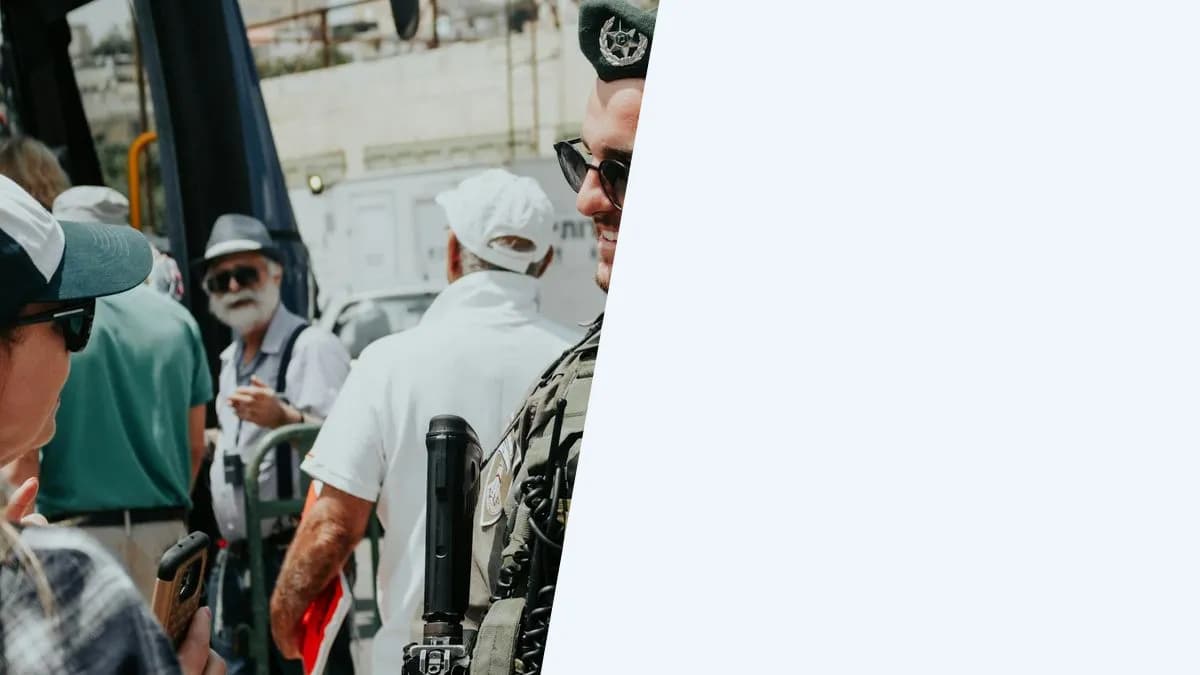

What Is a Lone Soldier?
A lone soldier (chayal boded) is an IDF soldier whose parents do not live in Israel. This includes olim who made aliyah independently, those whose families remained in their home country, and in some cases olim whose parents live in Israel but are unable to provide financial support. The IDF and the Israeli government recognize that lone soldiers face unique financial challenges and provide a comprehensive package of benefits to address them.
If you're an oleh planning to serve in the IDF, or you're a parent of a young person considering aliyah for army service, understanding these financial benefits is essential. The support system is extensive, and many lone soldiers find that their financial situation during and after service is surprisingly manageable when all benefits are claimed.
What financial benefits do lone soldiers get during service?
Lone soldiers receive a comprehensive package of financial benefits on top of the standard IDF soldier salary. The standard IDF salary is minimal, around NIS 900-1,800/month depending on role. Here is a summary of the key monthly benefits:
| Benefit | Monthly Amount | Notes |
|---|---|---|
| Lone Soldier Grant | Set by the IDF and updated periodically | Combat soldiers may receive more |
| Rent Subsidy | NIS 1,400 | Requires signed rental contract |
| Maintenance Grant | NIS 350 | Food, transport, personal items |
| Arnona Exemption | NIS 200-500 saved | Includes water discount |
The exact grant amount varies by service type and year, and it is adjusted periodically. Combat soldiers and those in certain demanding roles may receive additional supplements. All grants are deposited directly to your bank account alongside the regular IDF salary.
For the rent subsidy, you need a signed rental contract in your name and proof that you are not living in military housing full-time. Many lone soldiers share apartments with other lone soldiers or friends, splitting rent and using the subsidy to cover their share. In cities like Beer Sheva, Haifa, or Jerusalem, a room in a shared apartment may cost NIS 1,200-2,000, making the subsidy cover most or all of the cost.
The maintenance grant covers living expenses such as food, transportation, phone, and personal items on days when not on base. While this amount is modest, combined with the meals and basic supplies provided by the IDF on base, it covers the essentials for most soldiers.
For the ארנונה (Arnona) exemption, bring your military ID and lone soldier documentation to your local municipal office (iriya).
What travel discounts do lone soldiers receive?
All IDF soldiers receive heavily discounted public transportation (buses and trains), but lone soldiers receive additional benefits:
- Free flights home: Lone soldiers may be eligible for one subsidized or free round-trip flight per year to visit family in their home country, funded through various support organizations
- Rav-Kav discounts: Standard soldier discounts on all public transportation, typically 50% off regular fares
- Taxi subsidies: In certain situations (returning from leave to a remote base late at night), lone soldiers can access taxi subsidy programs
How does military service extend your oleh benefits?
One of the most important financial aspects for lone soldiers who are also olim: the time-limited oleh benefit windows that run as a fixed number of years from your aliyah date are extended by the duration of your military service. This applies to the customs and import benefits in particular:
- Your oleh vehicle (car) tax benefit window and the personal-effects shipping window are extended by the length of service, so the months you spend in uniform do not eat into the time you have to use them
- The customs (meches) import-rights clock for olim is paused or extended for the service period, since these benefits are granted for a fixed window from aliyah
The 10-Year Tax Exemption Is Not Paused by Service
A common misconception is that IDF service pauses the 10-year foreign-income tax exemption for new olim. It does not. That exemption is residence-based: it runs for 10 years from the date you became an Israeli resident and is unaffected by whether you are in the army. What service extends are the time-limited customs and import benefits (the car-tax and shipping windows). The tax-exemption clock keeps running regardless.
Don't Lose Your Extended Benefits
The extension of your time-limited customs and import windows depends on your service being officially documented. Register your status with the IDF Personnel Division as early as possible so your service dates are on record from day one. If documentation is delayed, the extension may not cover the full duration of your service.
This is a significant advantage. A soldier who serves 2-3 years effectively gets their time-limited oleh customs and import windows extended by that duration, giving them more time after discharge to use benefits like the reduced car-tax (mas knia) discount on an imported or new vehicle.
Do lone soldiers get free university tuition after service?
After completing military service, lone soldiers are eligible for full or near-full tuition coverage at Israeli universities and colleges. The Absorption Ministry and the IDF's Discharged Soldiers Unit (Agaf HaShikum) jointly fund this benefit, which can cover:
- Bachelor's degree tuition at any recognized Israeli institution (value: NIS 10,000-15,000/year)
- Pre-academic preparatory programs (mechina) for those who need to strengthen their academic Hebrew or meet university entrance requirements
- Professional certification courses in fields like tech, accounting, or trades
This benefit makes Israeli higher education essentially free for discharged lone soldiers, which is a transformative financial advantage for olim starting their careers.
Pikadon: The Savings Deposit
The Pikadon (פיקדון (Pikadon)) is a government savings deposit program for discharged soldiers. During your service, the Ministry of Defense and the IDF deposit money into a dedicated savings account on your behalf. Lone soldiers receive enhanced deposits compared to regular soldiers.
The balance at discharge depends on the length and type of service and on the deposit rates in force during those years, and the IDF is the body that publishes the current rates, so treat any single figure you read elsewhere as out of date until you check it. These funds become available for withdrawal and can be used for any purpose: education, a car, starting a business, or a deposit on an apartment. The Pikadon is separate from any savings you accumulate personally during service.
Combine Post-Service Benefits Strategically
Your Pikadon (NIS 20,000-30,000) plus full tuition coverage plus continued rental assistance creates a powerful financial launch pad. Many discharged lone soldiers use the Pikadon for a car or apartment deposit while relying on tuition coverage and rental assistance for living costs during their degree. Plan your post-service year before discharge to maximize all three.
What rights do lone soldiers keep after discharge?
Upon discharge, lone soldiers retain certain rights for an extended period:
- Employment assistance: The Discharged Soldiers Unit provides job placement services, resume workshops, and career counseling for up to 5 years after discharge
- Subsidized housing: Continued rental assistance during the transition to civilian life, typically for 1-2 years post-discharge
- Mental health services: Free psychological support through IDF and civilian mental health services
- Business grants: Discharged lone soldiers can apply for small business start-up grants through various government and NGO programs
Who helps lone soldiers find work after the army?
Several organizations specifically help lone soldiers and discharged immigrant soldiers find employment:
- Garin Tzabar: The program that helps many lone soldiers make aliyah also provides post-service support, including job placement and community networks
- Lone Soldier Center (Michael Levin): Provides practical assistance with everything from bureaucracy to job searching
- Nefesh B'Nefesh: Continues to support olim who served in the IDF with career guidance and employer connections
- Tech career programs: Several organizations run coding bootcamps and tech job placement specifically for discharged soldiers, many with special tracks for lone soldiers
Israeli employers generally view IDF service very favorably, and "lone soldier" on your resume signals resilience, independence, and commitment. Many employers specifically seek to hire discharged lone soldiers.
Lone soldiers (chayalim bodedim) receive a package of benefits on top of the standard IDF salary: a monthly lone-soldier grant, a rent subsidy that requires a signed rental contract, a maintenance grant for living expenses, and a full arnona exemption. After discharge they keep tuition coverage, transitional housing assistance, and a Pikadon discharge-savings deposit. Military service extends the time-limited oleh customs and import windows (such as the car-tax benefit), but it does not pause the 10-year foreign-income tax exemption, which is residence-based and runs from your aliyah date regardless of service.
The base IDF salary is modest, but lone soldiers add a monthly lone-soldier grant, a rent subsidy (with a signed rental contract), a maintenance grant, and a full arnona exemption. Combined with meals and supplies provided on base, most lone soldiers can cover living costs and save modestly. Exact amounts are adjusted periodically and vary by role, with combat soldiers often receiving more.
The Pikadon is a government discharge-savings deposit. The Ministry of Defense and the IDF deposit money into a dedicated account during service, with enhanced amounts for lone soldiers. On discharge the balance becomes available for any purpose, such as education, a car, a business, or an apartment deposit.
Discharged lone soldiers are eligible for full or near-full tuition coverage at recognized Israeli universities and colleges, jointly funded by the Absorption Ministry and the IDF Discharged Soldiers Unit. Coverage can also extend to pre-academic preparatory (mechina) programs and certain professional certification courses.
No. The 10-year foreign-income tax exemption for new olim is residence-based: it runs for 10 years from the date you became an Israeli resident and is not paused by military service. What service extends are the time-limited customs and import benefits, such as the reduced car-tax window and the personal-effects shipping window. The tax-exemption clock keeps running during service.
After discharge, lone soldiers keep access to job-placement and career services through the Discharged Soldiers Unit, transitional rental assistance for a period after service, mental-health support, and the option to apply for small-business start-up grants through government and NGO programs. Organizations like Garin Tzabar, the Lone Soldier Center, and Nefesh B’Nefesh continue to provide support.
Planning Ahead
If you're planning IDF service as a lone soldier, start financial planning early:
- Open your Israeli bank account and set up direct deposit before service begins
- Register as a lone soldier with the IDF Personnel Division as early as possible to ensure all benefits are in place from day one
- Connect with Garin Tzabar or the Lone Soldier Center for guidance on the paperwork and logistics
- Set up a simple budget: with all benefits combined, most lone soldiers can cover living expenses and even save modestly during service